The Substitution Decision: How Agentic NetOps Changes What You Need From Your Network Team
The best teams at the 2026 World Cup won’t be the ones with the most stars. They’ll be the ones with the best depth and support strategy. Great teams win...

Network leaders know that even a small configuration change can have ripple effects across the entire enterprise infrastructure. In today’s complex, multivendor environments, a single update—whether it’s a new firmware version, a security policy tweak, or a shift in application traffic paths—can unintentionally disrupt business-critical services or open new security vulnerabilities. The stakes are high: a misstep can trigger widespread outages, performance degradation, or compliance failures.
Yet, keeping pace with constant change is non-negotiable. As organizations evolve, so do their networks—through equipment upgrades, cloud migrations, and ongoing vendor-driven updates. The real challenge for network leaders is not just managing these changes, but understanding their systemwide impact before they go live. This is where network digital twins come into play.
Gartner projects that “Through 2028, organizations using network digital twins to model their configuration and software/firmware updates will reduce their unplanned outages by 70%.”
By creating a virtual replica of the entire network, digital twins allow leaders to simulate and validate configuration changes in a risk-free environment. But building and leveraging these models is no small feat. In this post, we’ll explore the unique challenges network teams face in predicting and controlling the systemwide effects of configuration changes—and how digital twins are poised to transform this critical aspect of network management.
Network digital twins are gaining popularity because they provide a cost-effective, automated, and reliable way to manage the growing complexity of modern networks, reduce risk, ensure compliance, and support agile business needs-all while minimizing downtime and operational costs.
We’re excited to share that NetBrain has been recognized in Gartner’s 2025 Leverage Network Digital Twins to Increase Agility and Lower Risk research.
This recognition highlights our dedication to empowering organizations to automate network discovery, mapping, and documentation; create automation in a turnkey manner; and proactively identify and resolve network issues before they impact business operations.
According to Gartner, “A network digital twin, by definition, is a model of the behavior of campus, software-defined WAN (SD-WAN) or data center network components, deployed as a stand-alone application or integrated into a larger management or security application.”
These models help network teams:
NetBrain’s Digital Twin
NetBrain’s Digital Twin stands out for its comprehensive, real-time modeling and automation.
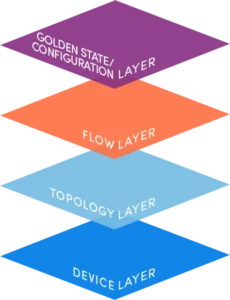
ensuring network intent aligns with best practices and security protocols.
NetBrain’s dynamic network modeling and automation capabilities are central to achieving this vision, enabling:
It’s clear that network digital twins aren’t just a future state – they’re the key to resilient, cost-effective, and agile network operations today.
Stay ahead of the curve with NetBrain – where automation meets assurance
By leveraging Network Digital Twin technology, enterprises can reduce downtime, optimize performance, and accelerate digital initiatives—making NetBrain a critical partner in modern network automation.
With NetBrain’s next-gen automation platform, your network’s digital twin is always up-to-date, always verifiable, and always ready for what’s next.